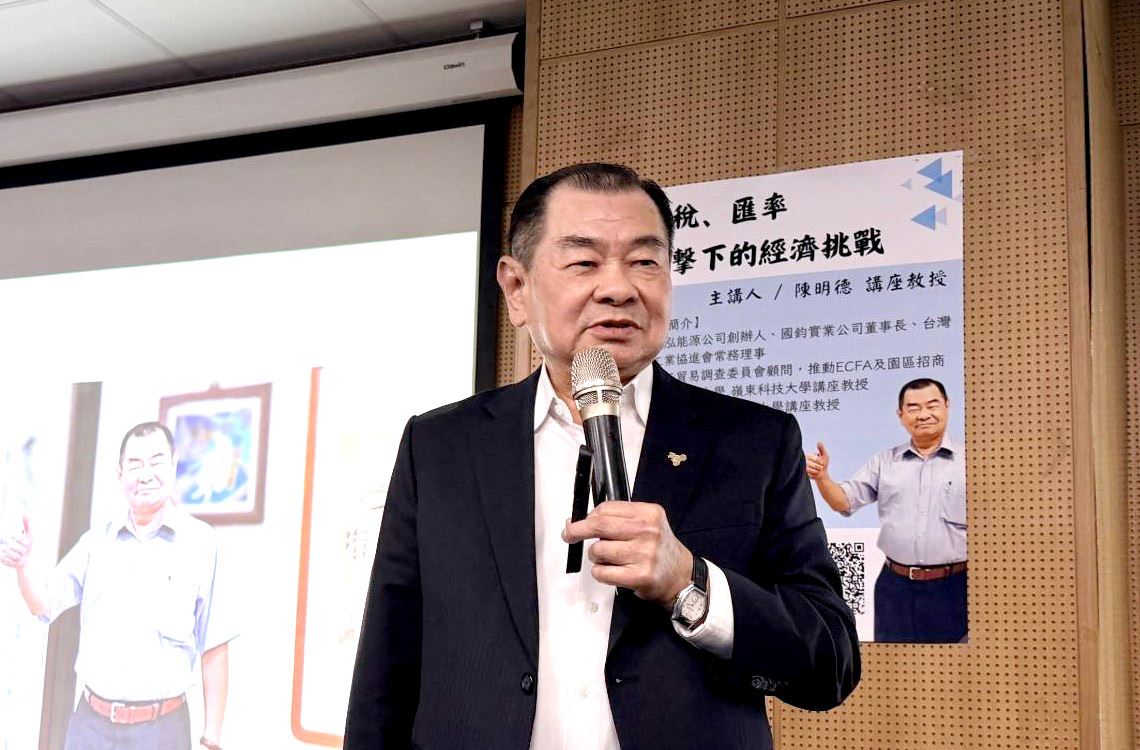
陳明德教授於暨大舉辦「關稅、匯率衝擊下的經濟挑戰」專題講座中指出,美國自2025年7月起正式啟動「對等關稅」政策,對台灣輸美產品課徵高達20%的疊加關稅,使原本零關稅或低稅率產品瞬間被推上高稅階,導致出口成本飆升、價格競爭力驟減。他強調,台灣是典型的外銷導向型經濟體,中小企業佔企業總數98%,創造逾916萬個就業機會,若無法及時調整,恐引發大規模失業潮與產業外移現象。
陳教授也提出具前瞻性的策略建議。他認為,企業應以「止血」為首要任務,透過外匯避險、協商關稅分擔、延後非必要資本支出等方式穩定現金流。中期應加速市場多元化與產地轉移,拓展東協、印度與墨西哥等新興市場,並導入智慧製造以降低單位成本。長期而言,建立技術專利佈局與品牌通路建設,強化綠能與ESG永續競爭力,才能在全球供應鏈重組中掌握主導權。
During a special lecture titled “Economic Challenges Amid Tariff and Exchange Rate Shocks” at National Chi Nan University (NCNU), Professor Chen Ming-Te pointed out that the United States officially launched its “reciprocal tariff” policy in July 2025, imposing additional tariffs of up to 20% on Taiwanese products exported to the United States. As a result, products that previously faced zero or low tariffs were suddenly subjected to significantly higher rates, causing export costs to surge and price competitiveness to decline sharply. He emphasized that Taiwan is a typical export-oriented economy, with small and medium-sized enterprises (SMEs) accounting for 98% of all businesses and providing more than 9.16 million jobs. Without timely adjustments, Taiwan could face widespread unemployment and the relocation of industries overseas.
Professor Chen also proposed several forward-looking strategic recommendations. He suggested that businesses should make stabilizing cash flow their top priority by adopting foreign exchange hedging measures, negotiating the sharing of tariff costs, and postponing non-essential capital expenditures. In the medium term, companies should accelerate market diversification and relocate production bases where appropriate, expanding into emerging markets such as ASEAN countries, India, and Mexico while introducing smart manufacturing technologies to reduce unit costs. In the long term, businesses should establish strategic patent portfolios and strengthen brand development and distribution networks, while enhancing their competitiveness through renewable energy and Environmental, Social, and Governance (ESG) sustainability initiatives. These measures, he noted, will be essential for gaining a stronger position amid the restructuring of global supply chains.