國立暨南國際大學持續公開揭露聯合國永續發展目標(SDGs)之推動成果,並透過《2025年校園永續報告書》及校內公開資訊說明 SDG 6「潔淨水與衛生」之年度進展。本校推動重點涵蓋污水處理、水資源回收再利用、放流水水質監測、雨水回收及安全飲用水管理,展現校園在水資源循環利用與用水安全上的持續投入。
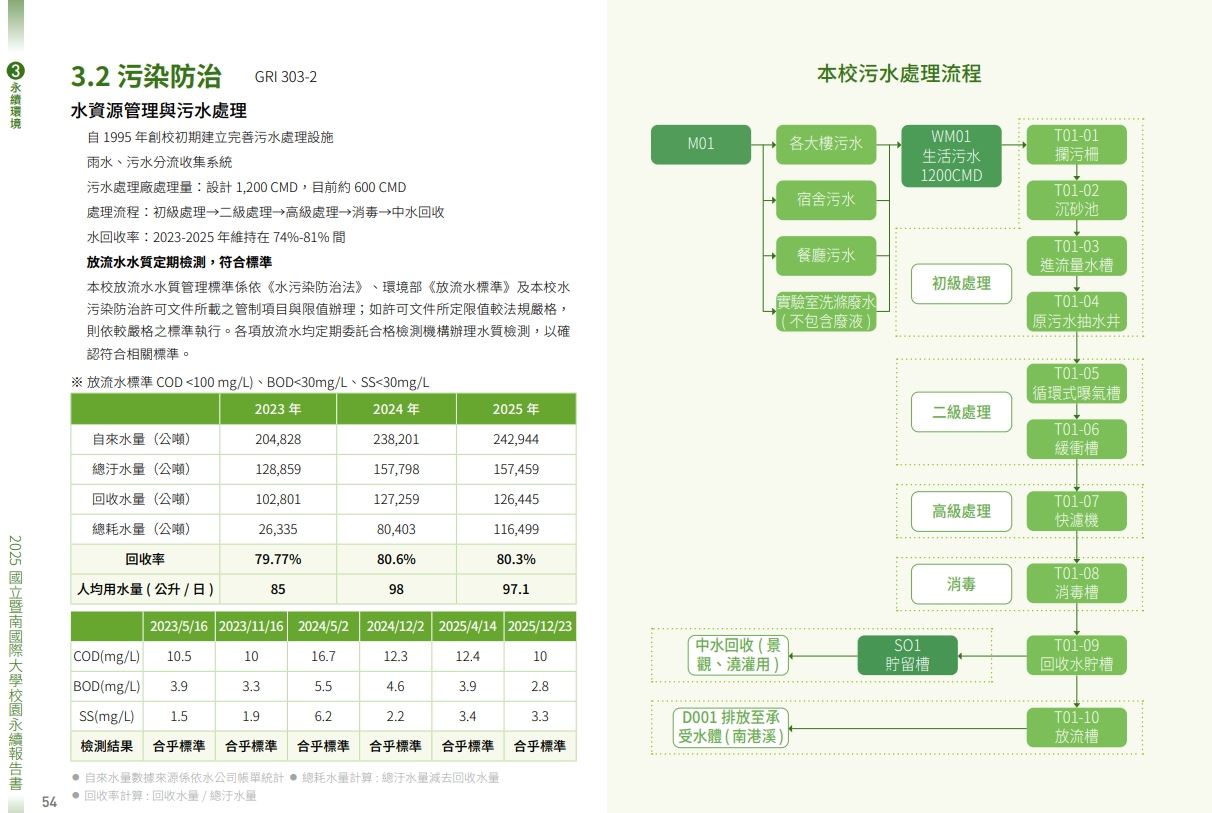
在污水處理與水資源回收方面,本校建置雨污水分流及校園污水處理系統,污水經處理後部分回收供景觀與澆灌再利用。依《2025年校園永續報告書》所載,2025年總污水量為157,459公噸,回收水量為126,445公噸,回收率達80.3%,顯示本校持續提升水資源循環利用效率。
在水質監測與污染防治方面,本校於2025年4月及12月各進行一次放流水檢測,化學需氧量(COD)、生化需氧量(BOD)及懸浮固體(SS)等指標均符合相關標準,落實校園水污染防治與排放管理。
此外,本校持續建置建築物雨水回收系統,並依飲用水設備管理規範辦理校園飲水設備水質檢驗。依公開資料顯示,2025年3月共抽驗25台飲水機,檢驗結果均符合標準,以維護校園安全飲用水品質。
本頁內容依據《2025年校園永續報告書》及本校公開網站資訊整理。
National Chi Nan University (NCNU) publicly discloses its progress on the Sustainable Development Goals (SDGs) and reports annual results related to SDG 6: Clean Water and Sanitation through its 2025 Campus Sustainability Report and other publicly available university information. NCNU’s work covers wastewater treatment, water reuse, effluent quality monitoring, rainwater harvesting, and safe drinking water management, reflecting its continued efforts in responsible water use and campus water safety.
In wastewater treatment and water recycling, NCNU operates a campus system with separate rainwater and sewage collection, and treated wastewater is partially reused for landscaping and irrigation. According to the 2025 Campus Sustainability Report, the university recorded 157,459 tonnes of wastewater in 2025 and reclaimed 126,445 tonnes for reuse, achieving a water recovery rate of 80.3%.
In water quality monitoring and pollution prevention, NCNU conducted effluent testing twice in 2025, in April and December. Key indicators, including Chemical Oxygen Demand (COD), Biochemical Oxygen Demand (BOD), and Suspended Solids (SS), all met the relevant standards reported by the university.
NCNU also continues to develop rainwater harvesting systems in campus buildings and conducts regular water quality testing of drinking water equipment in accordance with relevant management requirements. Public information shows that 25 drinking water dispensers were tested in March 2025, and all results were compliant.
The information on this page is compiled from NCNU’s 2025 Campus Sustainability Report and related public university webpages.
NCNU Sustainable Water Management: Wastewater Treatment Infrastructure and Water Recycling Impact
Since its establishment in 1995, National Chi Nan University (NCNU) has implemented robust environmental infrastructure featuring completely separated rainwater and wastewater collection systems.
Key Operational Features and Environmental Achievements:
-
Wastewater Treatment Capacity & Multi-Stage Processing (SDGs 6 & 11) The campus wastewater treatment plant operates with a designed capacity of 1,200 CMD (cubic meters per day) and currently processes approximately 600 CMD. The advanced treatment pipeline includes:
$$\text{Primary Treatment} \rightarrow \text{Secondary Treatment} \rightarrow \text{Advanced Treatment} \rightarrow \text{Disinfection} \rightarrow \text{Reclaimed Water Recycling}$$
-
High Reclaimed Water Recovery Rates (SDG 12) Through systematic wastewater recycling, NCNU maintained an outstanding recycled water recovery rate between 74% and 81% from 2023 to 2025, significantly reducing fresh water consumption and enhancing campus water resilience.
- Rigorous Effluent Water Quality Standards & Compliance Effluent water quality management adheres strictly to the Water Pollution Control Act, the official Effluent Standards issued by the Ministry of Environment, and NCNU's internal water pollution control permits. Where permit requirements are stricter than national regulatory thresholds, NCNU adopts the stricter standards. All discharged water is regularly sampled and tested by certified independent testing agencies to ensure full compliance and transparent environmental safety.
相關連結:
1.2025永續報告書
https://environ.ncnu.edu.tw/p/405-1020-36500,c3620.php?Lang=zh-tw
https://environ.ncnu.edu.tw/var/file/20/1020/img/843/290036603.pdf#page=56
2.潔淨飲用水
https://sec.ncnu.edu.tw/var/file/5/1005/img/260/606391192.pdf