國立暨南國際大學持續公開揭露聯合國永續發展目標(SDGs)之推動成果,並透過《2025年校園永續報告書》及校內外公開資訊說明 SDG 13「氣候行動」之年度進展。本校推動重點涵蓋氣候變遷減緩與調適、能源效率提升、再生能源發展、氣候風險管理及氣候行動知識交流,展現大學在低碳轉型與永續治理上的持續投入。
在減碳與能源轉型方面,2025年本校汰換67台老舊冷氣設備,依報告書統計節電效益約11萬度,校園能源使用密集度(EUI)由2024年的55.2降至2025年的51.88,顯示校園能源效率持續改善。同時,本校年度太陽光電發電量達16,709.20 GJ,已完成屋頂型太陽光電設施總容量4.129 MWp,持續提升再生能源使用與自發自用能力。
在氣候治理與風險管理方面,本校依據氣候相關財務揭露(TCFD)架構,公開揭露氣候風險辨識、潛在影響、因應策略及管理目標,並以2043年淨零排放為長期目標,持續推動校園氣候治理與調適行動。
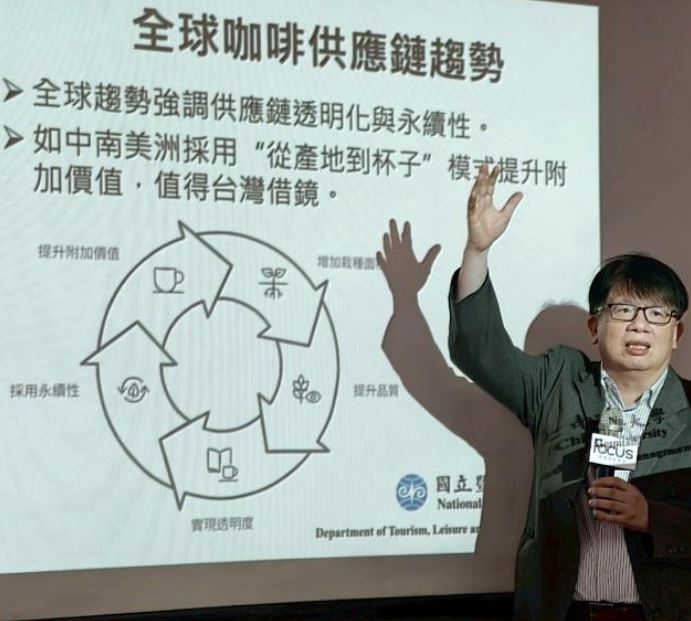
此外,本校亦透過論壇與國際交流推動氣候行動知識擴散。2025年,本校與國立臺灣大學共同辦理「碳在杯中」論壇,聚焦咖啡產業碳管理與低碳轉型議題;同年主辦 UI GreenMetric 世界綠色大學排名發布會暨圓桌論壇,促進國際高等教育機構於氣候行動與永續治理方面的經驗交流與實務分享。
本頁內容依據《2025年校園永續報告書》及本校相關公開網站資訊整理。
National Chi Nan University (NCNU) publicly discloses its progress on the Sustainable Development Goals (SDGs) and reports annual results related to SDG 13: Climate Action through its 2025 Campus Sustainability Report and other publicly available information. NCNU’s work covers climate mitigation and adaptation, energy efficiency, renewable energy development, climate risk management, and knowledge exchange on climate action.
In carbon reduction and energy transition, NCNU replaced 67 ageing air-conditioning units in 2025, with reported electricity savings of approximately 110,000 kWh. Campus Energy Use Intensity (EUI) decreased from 55.2 in 2024 to 51.88 in 2025, indicating improved energy performance. NCNU also reported annual solar power generation of 16,709.20 GJ and completed rooftop solar photovoltaic installations with a total capacity of 4.129 MWp, demonstrating continued progress in renewable energy use.
In climate governance and risk management, NCNU disclosed climate-related risk identification, potential impacts, response strategies, and management targets under the Task Force on Climate-related Financial Disclosures (TCFD) framework. The university continues to align these efforts with its long-term target of net-zero emissions by 2043.
NCNU also promoted climate action through public forums and international exchange. In 2025, the university co-organised the “Carbon in the Cup” forum with National Taiwan University to discuss carbon management and low-carbon transition in the coffee industry. NCNU also hosted the 2025 UI GreenMetric World University Rankings Announcement and Roundtable Forum, providing a platform for international exchange on climate action and sustainability governance.
The information on this page is compiled from NCNU’s 2025 Campus Sustainability Report and related public sources.
NCNU and NTU Co-Host "Carbon in the Cup" Forum to Drive Net-Zero Transformation and Circular Innovation in the Coffee Industry
On May 27, National Chi Nan University (NCNU) and National Taiwan University (NTU) jointly initiated and hosted the "Carbon in the Cup: Net-Zero Challenges and Nature-Based Solutions for the Coffee Industry" forum at the NTU campus. Bringing together academic rigor and practical expertise from both universities, the forum convened leaders from industry, government, and academia to address climate change challenges, pioneer sustainable transitions, and showcase Taiwan's higher education leadership in driving carbon neutrality.
1. Cross-Sectoral Partnership and Full-Chain Carbon Management (SDG 17)
Chaired by Prof. Ben-Ji Chang (Distinguished Professor at NTU and Honorary Chair Professor at NCNU), the forum featured keynote talks from industry executives, procurement leaders, and academic experts. Speakers emphasized that achieving net-zero requires "full-chain carbon management"—integrating green practices across cultivation, processing, transportation, consumption, and waste recovery.
2. Tech Innovation, Circular Economy, and Commercial Value (SDGs 9 & 12)
NCNU PhD candidate Chang-Ping Lu showcased groundbreaking technology upcycling spent coffee grounds into high-value industrial materials—including carbon fibers, polymer materials, building components, battery elements, and biodegradable plastics. This innovation has already attracted interest from global brands such as Uniqlo, Nike, and Toyota. NCNU Distinguished Prof. You-De Dai highlighted that with Taiwan importing over 45,000 metric tons of coffee beans annually, converting just 10% of these byproducts into industrial raw materials could generate an estimated economic value of up to NT$1 billion.
3. Alignment with Global SDGs and International Outreach (SDGs 4, 9, 12, 13 & 17)
The forum directly advanced multiple UN Sustainable Development Goals:
-
Green Tech & Decarbonization (SDGs 9.4 & 12.5): Introduced smart coffee factory designs, resource recycling, and AI-driven carbon auditing.
-
Climate Action & Low-Carbon Education (SDGs 4.7 & 13.3): Fostered interdisciplinary education to cultivate next-generation sustainability leaders.
-
Global Green Supply Chains (SDG 17): Advanced cross-border green supply chain collaborations with university and industry partners in Japan, Thailand, and Vietnam.
NCNU Vice President Yung-Ping Tseng underscored that transforming the coffee industry requires pooling technological, policy, and market resources. Moving forward, NCNU and NTU will deepen their alliance to build an internationally competitive, sustainable coffee ecosystem.
相關連結:
1.2025永續報告書
https://environ.ncnu.edu.tw/p/405-1020-36500,c3620.php?Lang=zh-tw
https://environ.ncnu.edu.tw/var/file/20/1020/img/843/290036603.pdf
2.咖啡產業淨零轉型契機
https://www.clir.ncnu.edu.tw/activity-records/report/ncnu-sustainable-dining-ncnu/
3.暨大主辦世界綠色大學排名發布會
https://www.cna.com.tw/news/ahel/202512050252.aspx